Your Complete Guide to Moving Machines in India: Types, Prices, and Best Practices
Relocating heavy machinery, whether it’s just within the same facility or to a completely new location, is something quite a challenge that could either enhance or bring down one business’s operational efficiency. For Indian business owners, the main focus is to save time and avoid damages at all costs.
Putting money into an efficient shifting machine can not only spare you a fortune in those expensive repair works but also keep the workers who handle manual lifting safe and healthy and reduce frequent hiring of crane services even for the smallest relocation. The purpose of this guide is to show you the fundamental machinery from rolling tools to hydraulic carts, geared toward the Indian industrial sector.
What is Machine Shifting? Understanding the Core Process
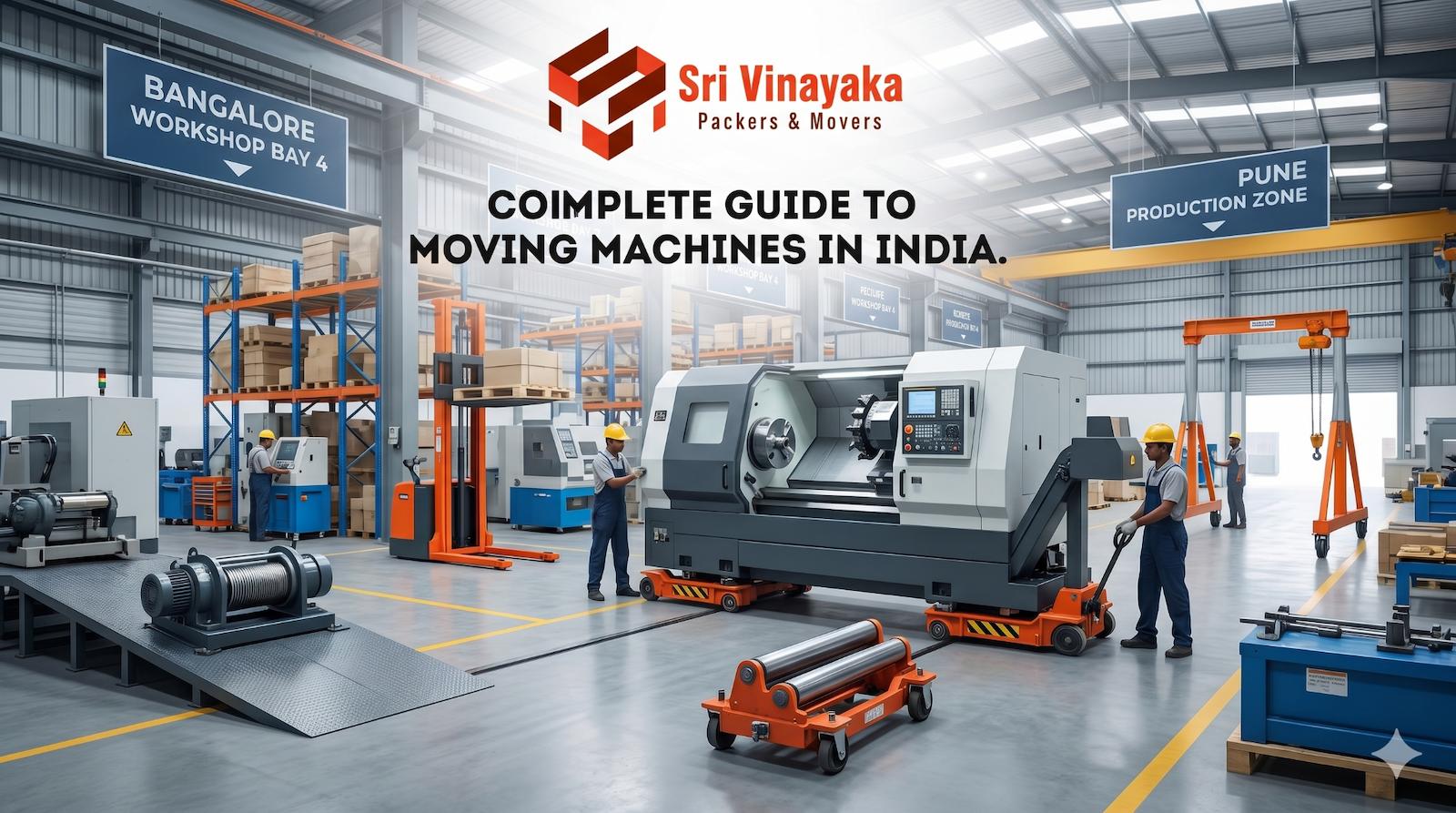
Actually, machine shifting is not as simple as just transporting equipment from one place to another. In fact, it is the movement of heavy machinery as well as excessively large equipment from one place to another, which usually entails carefully dismantling, tightly packing, transporting cautiously, and installing accurately without any error. For workshops in Bangalore or Pune, this is like a logistics project that makes sure production lines get back to work quickly without any alignment mistakes.
At the very start, the crew assesses the machine as well as the route. They find out the load support of the floor, the size of doorways, and such things that can be in their way. Then, using appropriate machine shifting equipment like rollers, skates, or hydraulic jacks, the workers lift, relocate, and adjust the machine to the new level. Knowing this procedure will help business owners understand the importance of professional equipment from a safety point of view.
Essential Types of Shifting Machines and Equipment
As per weight, distance, and environment, we require different types of equipment. You can think of these main kinds of shifting machine units in the market in India.
Mini Lifts and Material Shifting Machines
When you want to shift your materials vertically or between floors, it is a must to have a building material shifting machine for the purpose. The Mini Lift of 500KG Heavy Type is a favorite one in the warehouses of India. It has a panel belt gearbox to transmit power and a gear brake system which is very important to prevent falling down.
When the machine reaches the limits, the smart motor stop feature turns off the power to avoid excess loading. These mini hoists are just right for small industries and godowns that want to do material handling with automation but on a very limited scale and without big investment.
Winch Machines for Weight Lifting
A winch machine is a simple spool and a cable device to move heavy loads. Unlike cranes, winches are used mostly for horizontal pulling or inclined lifting on loading docks.
An electric winch machine is ideal for Indian sites and small warehouse owners due to its low cost and ability to move steel pallets or heavy items along the ramp. The main advantages of the winch are its very small footprint and quite simple mounting on existing structures.
Builder Hoists and Steel Trolleys
If you want to operate mainly with steel bars or concrete blocks at your construction site, then the builder hoist accompanied by a steel trolley would be the best shifting machine combination for you. This solution can give you vertical lifting as well as horizontal movements on the road.
Thanks to the small sports car-like wheeled platform, what you get is the whole movement of your material from the ground floor to the upper floors with minimum manual labor which is labor-intensive for Indian construction sites and saving a lot of time is also one of their strategies.
Machine Shifting Rollers and Trolleys: The Core Moving Tools
How Machine Shifting Rollers Work
Machine shifting rollers also are known as machinery skates or roller skids use rolling motion to move heavy loads. They are small, flexible, and simple tools to manipulate. The material used in the body of all these rollers is usually high-strength steel alloys which demonstrates their strength to withstand heavy loads.
When working, first the machine is raised with the help of hydraulic jacks, then rollers are put under and the machine is either pushed or pulled with a winch across the floor. Here, the motto should be “slow and steady” so as not to cause any damages either to the floor or the equipment.
The Role of the Machine Shifting Trolley
Though rollers work well when the path is a straight one, a machine shifting trolley, in most cases, ensures better stability and steering as well. These trolleys often feature swivel casters and have a lower profile.
In situations like setting up or reorganizing the factory layout, to choose a trolley is to have the ability to place machines such as CNC or grinders in a very precise way. Compared to the skids which might easily slip sideways, a sturdy trolley assures a safe load and prevents it from toppling, Mostly when turning corners.
Cost and Service Considerations for the Indian Market
The cost of a shifting machine in the Indian market depends on the capacity and technical level. Simple machine shifting rollers set prices may start from a few thousand rupees but the cost of a hydraulic machine shifting trolley for 10-tonne loads is much more.
Besides buying the equipment, many companies seek local Machine Shifting Services. Generally, these services charge for the weight of the machine, time duration, and difficulty level of dismantling. Professional services help ensure that high-value machines like lathes and SPMs stay intact with their warranty in major cities like Bangalore and Chennai.
Which Machine is Used to Lift Heavy Objects?
Basically, if the main aim is to lift, then a crane is what you need. Yet, the cranes that are used to shift the machines inside a bay, you do not need a truck crane. Gantry cranes and jib cranes are both common in Indian industrial firms.
What makes a mobile gantry crane good is that it can be adjusted in height, has wheels and is able to lift an engine or press die and carry it horizontally as well. For very small lifting operations, manual labor combined with a low effort hydraulic jack or engine crane (a cherry picker) should be sufficient. Depending upon how high you want to lift and how heavy the object is, your choice of the crane shall be determined.
The Cost-Saving Advantage for Indian Workshops
The advantage of having your own building material shifting machine is that it can spare you yearly a huge amount of money i.e. lakhs of rupees. By owning a mini lift or a set of rollers, a small workshop eliminates the recurring expense of hiring external riggers for every layout change.
Apart from this, it helps to reduce the “dead time” when machinery is not operational. Having your own equipment gives you the freedom to rearrange your production floor layout anytime which directly leads to lean manufacturing efficiency and better cash flow.
Quick Glance: Checklist for Buying a Shifting Machine
It is very important to check this final list before you commit yourself to buying your machine shifting equipment so that you meet your operational needs without overspending.
- Load Capacity vs. Actual Weight: Always buy equipment rated for 25% more than your heaviest machine. Safety shall always be the first concern.
- Floor Conditions: Rollers perform the best on smooth concrete. If your floor is uneven or has cracks and expansion joints, then wider trolleys or tracked movers would be the right choice.
- Lifting Height: Make sure that hydraulic jacks or toe jacks have sufficient stroke to raise the machine just enough for the rollers/trolleys to be placed underneath.
- Maneuverability: Swiveling trolleys have a big edge in factory spaces that are congested as they can navigate corners easily.
Service Support: Spare parts (like hydraulic oil seals) must be easily available from the local Indian suppliers.
Conclusion
So, moving heavy machinery may be challenging at first but when you know the one line difference between a winch, a roller, and a builder hoist, Indian businessmen will be able to make the best decision that even they won’t regret for safety and minimization of operation costs.
From a simple machine shifting trolley for a lathe to a full-scale machine shifting rollers set for a press, it’s a matter of finding the right tool for the job. The purchase of the proper equipment will assure consistent agility, productivity, and profitability of your workshop over the coming years.
FAQs
Rollers are basically round tubes that simply roll under the load and move it. They are best suited for straight direction movement. Skids (or skates) are short and flat platforms having rollers underneath that give a load better stability and steering. Skids usually are chosen for accurate positioning in factory layout setups.
You can visit the online directories like Justdial or IndiaMART to find reputed service providers. Select service providers with high star rating (e.g. 4.5+) and good reviews for timely delivery and safe handling of goods. Also, check if they are insured for the value of your machinery.
Regular shifting rollers are suitable only for smooth industrial floors. If you have uneven sites then you will need to use heavy-duty trolleys with pneumatic tyres or tracked carriers. However, for general shifting machine construction purposes a builder hoist or rough-terrain forklift would be more suitable.
Shifting machine prices in India range a lot. You can get a primary set of rollers for 3-5 tons for Rs.15,000 – 30,000. A hydraulic machine shifting trolley of 10 tons is available at a price of Rs.50,000 to 1 50 000, and specialized mini lifts or winch machines are generally priced starting at Rs.30,000 based on the gearbox and brake system.