
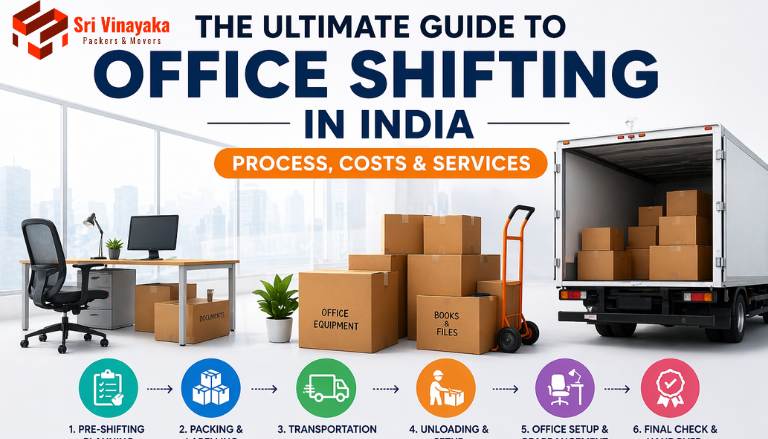
The Ultimate Guide to Office Shifting in India: Process, Costs & Services
Moving your office marks a big moment for any Indian company. When startups run out of room or firms move to smarter spots, it’s never only about carrying desks and chairs. Shifting includes handling computers, servers, and even updating official addresses under local laws.
Across India, companies now expect moves that cause almost no work stoppage, pushing demand for smooth relocations higher. Think ahead, plan well – what it takes, how much it costs, who handles it best – all laid out here.
What is An Office Relocation?
One step beyond just changing addresses, shifting offices means picking up everything a business uses every day. Moving out isn’t only about leaving old walls behind but carrying routines into a fresh space. What seems like a change on paper becomes dozens of tasks when desks, files, and systems must travel safely. Not simply swapping locations, the shift includes rewiring internet lines so emails keep flowing without pause. People need chairs, screens, storage – basically a working world rebuilt fast.
Key Assets Involved in Office Shifting – Including Furniture Relocation
Most days start with shifting loads through hallways. Desks, chairs, and cubicle frames go first – handled slow to avoid scuffs on floors. Computers ride inside cushioned covers; servers move in shock-proof cases. Tech firms sometimes transfer whole server rooms – cables labeled, racks bolted tight. Modular stations come apart piece by piece, then rebuild just right elsewhere. Meeting tables, coffee machines, fridges – all loaded in order. Paper files travel sealed in plastic bins, stacked deep inside trucks. Moving crews wrap glass partitions in foam blankets. Crates made to fit odd shapes keep things snug. Vehicles with live tracking guard expensive gear across town. Everything arrives clean, working exactly where it should.
Why Minimizing Business Disruption is the Goal of Office Shifting
Most people think moving offices means packing up furniture. Yet what really matters is keeping work flowing without hiccups. A break in routine might cost money, delay projects, and upset staff. That is why expert movers plan every detail so the business runs as usual. The goal sits quietly beneath the surface – continuity disguised as logistics.
How Professional Movers Ensure a Seamless Transition
Starts with a walkthrough – pro team checks everything before shifting begins. Labels go on each piece, so nothing gets lost along the way. Boxes tagged by zone using colors that match work areas later. A layout sketch maps where things land in the next space. Tech gear? Taken apart carefully, then brought back online fast – connections live again in just hours. Moving feels quiet even when it’s busy. Work flows without gaps. Change happens without chaos. Shift finishes clean, almost like it was never started.
The Hidden Cost of Downtime vs. Professional Shifting
Downtime hits harder than most bosses expect. Lose just two days with fifty staff standing idle, wages still paid, and that quiet pause drains 2 to 3 lakh fast. Shift it all Friday night into Saturday, finish by Sunday – thanks to teams like Sri Vinayaka Packers & Movers. Come Monday, desks hum again, work flows, no gaps. What looks like spending turns out to be holding value tight.
How Much Does It Cost To Move An Office in India?
One thing that affects how much you pay to move an office in India is what needs moving. Distance plays a big role, too, along with extras such as boxes or coverage if something breaks. Small or mid-sized shifts might take anywhere from Rs.1500 up to Rs.50000.
Quotes seen online sometimes start under a thousand, going just past eleven grand for simpler jobs. Heavy desks, servers, and complex gear push costs higher without notice. Bigger spaces elsewhere, say in Britain, run about three to ten thousand pounds – that’s close to three lakhs into double digits here – yet local pricing stays on the lower side.
Breaking Down the Office Shifting Cost Components
Several factors influence the final bill:
- Heavier loads take up space, which increases shipping expenses.
- Cost climbs when cargo grows, simply because size and mass add up during transit.
- Close-by relocations inside one town cost less.
- Moving across cities pulls more cash.
- State-to-state travel? That adds up fast.
- Packed tight, bubble wrap shows up first on the bill.
- Cardboard shells with ridges come next, pushing prices higher.
- Wooden containers finish the list, each one chipping away at the budget.
- A single percent, sometimes two, usually covers insured assets when figured against their stated worth.
- The number of workers needed depends on how many people it takes, plus the time involved.
Hidden Costs to Watch Out For
Pricing might seem clear at first, yet stairway access often brings added fees when lifts aren’t an option. Modular setups could mean separate bills for taking apart and putting back together. Delays in occupancy? Storage charges usually follow.
Equipment that needs care – like servers – can trigger premium handling marks. Quotes rarely show everything unless you request full disclosure upfront. Surprises lurk beneath terms like standard rate. Downtime during relocation carries its own tab. Counting only the initial number misses long-term burdens. True expense hides in overlooked details.
Office Shifting Process: A Step-by-Step Guide
Start by getting a clear picture of how office moves unfold – it makes organizing much smoother. Picture six steps, one flowing into the next, beginning with checking what’s needed and ending with help after everything is settled.
Step 1 – Planning and Budgeting
A team from different departments can handle the transition smoothly. Budget planning covers transport, fresh furnishings, tech setup again, along with extra funds if needed. Quotes arrive from multiple trusted firms before any choice is made. Key parts of this process include stages for office moves, flow of relocation tasks, and a list for shifting workplaces.
Step 2 – Decluttering and Inventory
Start by sorting through what you own. Get rid of anything broken or useless – sell it, give it away, or recycle. For tech gear, write down each piece, including serial numbers. A clear list helps track what goes where. Less stuff means smaller load, lower bill.
Step 3 – Packing and Labeling
Boxes get colored tags – blue means finance, green stands for HR. When something breaks easily, it wears a bold warning sign. Computers and tech gear disappear into special bubble wrap that stops static. Every single container shows up on one big list. That list knows where everything belongs.
Step 4 – Transportation and Logistics
Trucks full of cargo move along set paths. Sometimes they stick to schedules, sometimes not. Roads guide their way every single time. When moving offices across state lines, pick a mover with proper permits plus valid GST registration. Real-time location updates come through GPS monitoring of their trucks.
Step 5 – Unpacking and Setup at New Location
Once everything arrives, workers take things out just like the layout shows. They put furniture back together – then hook up computers before arranging shared spaces. Nothing gets left behind because someone checks every spot at the end.
Step 6 – Post-Move Support
When things go wrong – say, something breaks or vanishes – dependable moving teams respond within one to two days. Should the new workspace still be under construction, certain companies hold onto your belongings until its set.
Key Considerations for Registered Office Shifting – Same City vs. Inter-State
Every time a business moves its official address, what happens next depends on location. If staying in the same city, steps are simpler. Crossing state lines? That triggers extra filings under India’s Company Law of 2013. The Registrar watches closely – miss a rule, face fines. Location changes aren’t just postal updates; they carry weight.
Shifting of Registered Office Within the Same City
One step move, really. The board says yes first. Then that Form INC-22 goes to the RoC – must land there inside thirty days after moving. Stationery gets a new address printed. GST record shifts too. Bank details? Updated also. Shareholders stay out of it unless the MOA blocks moves like this. Paperwork trail matters most here.
Shifting of Registered Office from One State to Another
Shifting an office across states brings extra steps. Shareholders first pass a special decision, then wait for NCLT to agree. After that, new paperwork kicks off in the destination state. Because tax rules tie to location, a fresh GST number becomes necessary.
Updating PAN details follows, along with changes at banks and government records. Time needed? Roughly two to three months. Starting early makes it smoother.
A fresh set of eyes might ease the load when forms pile up. Moving an office across state lines often trips people up. Shifting a company’s official address isn’t just updating a map pin. Courts step in before anything gets approved – NCLT has the final say.
Why Choose Sri Vinayaka Packers & Movers for Your Office Shifting in Bangalore
Startups in Bangalore, where tech thrives, need trustworthy help when moving offices. Not every company delivers like Sri Vinayaka Packers & Movers does – clear pricing, smooth transfers, no broken gear. Their plans cover desks, servers, and even full digital hubs. Because time matters, work wraps mostly on weekends, so operations stay untouched. Very few firms manage disruption this well during relocation, especially for Bangalore office shifting services.
Specialized Office Furniture Relocation Services
Out of sight, they move office furniture without a hitch. Modular desks come apart gently before the trip. High-shine surfaces get cocooned in soft layers. Once on-site, everything clicks back together just right. Ergonomic seating rides are secure. Conference tables travel flat and steadily. Storage units arrive intact – no shortcuts taken. These are handled through the office furniture relocation services of Sri Vinayaka Packers & Movers.
Quick Glance at Your Office Shifting Checklist
Got everything ready for the office shift? Walk step by step through these must-do steps first:
- Start by looking at what needs doing. Money should match each part of the work. Figure out the size first, then decide on the cost.
- Let staff know the office has moved. Customers should hear it next, straight from your team. Suppliers need a message too – send details their way. Banks require updates just like anyone else. Share the change promptly.
- Pick a mover who comes recommended. One way is looking up feedback online. Try to line up three estimates before deciding. Reviews help spot which ones deliver what they promise. Sri Vinayaka Packers & Movers is a highly rated, trusted brand in Bangalore for office relocation services
- Pick your moving day around a quiet time. Maybe go on Saturday or Sunday. A public break could work too. That way life keeps flowing smoothly.
- Copy files from every server to secure online storage. That way, if something goes wrong, nothing gets lost. Refresh these copies often so they stay up to date.
- Update your company records at the Registrar of Companies using the right forms. Next comes adjusting your GST details whenever there’s a shift in operations. Other permits may need changes too, depending on what you run.
- Sketch the fresh setup. Place desks first, then shared zones ahead of arrival day.
- After moving, check every item. See that nothing is missing. Make sure everything arrives safely.
Conclusion
Shifting an office takes serious effort. Yet when done with clear thinking and trusted help, things flow without tension. Picture this: knowing exactly what moves involve, plus handling paperwork like address updates on time. In Bangalore, one name stands out – Sri Vinayaka Packers & Movers – with sharp pricing and steady hands. Their work guards equipment carefully while drastically cutting down inactive hours. Small teams relocating nearby? Large firms going state-wide? Either way, coordination stays tight. Think ahead before the next transfer begins – that quiet preparation turns pressure into progress.
FAQs
Make sure that you inform us about your office relocation no later than 30 days before the move. Compose an official email or letter mentioning your new address, the moving date, reasons for the change (e.g., more space, better facilities), and the benefits for employees (e.g. larger break areas, improved transport links). With clients, focus on reassuring them that all services will continue without interruption. Also, update your website, Google My Business, and email signatures with the new address.
Begin with a very detailed moving plan created at least 2-3 months ahead. Delegate a move coordinator, get rid of unnecessary items, hire professional office shifting services, and make a backup of all digital data. Label each box with the room number and destination, and keep an inventory list. Make a move on a weekend and get all IT connections tested before staff return.
Office relocation mainly includes specialized handling of IT equipment, servers, modular furniture, and confidential documents. Also, it requires planning for minimal downtime and at times, legal compliance for changes of registered office.
Residential moving is mainly focused on household goods like clothes, kitchenware, and personal furniture. Office relocation generally requires bigger teams, specially designed crates, and floor-plan mapping.
By following a phased approach or opting for a weekend move, it can be done. Movers can shift one department while others are still working or they move the entire office on Saturday and Sunday so that you are open on Monday. Cloud-based systems and temporary telecommuting also help keep the business running.
The requirements are a special resolution passed by the shareholders, Form MGT-14, Form INC-23 for NCLT approval, a fresh certificate of incorporation from the new state, updated memorandum and articles of association, and proof of new address. Besides that, you should be applying for a new GST registration and updating your PAN, bank accounts, and professional tax registrations.