
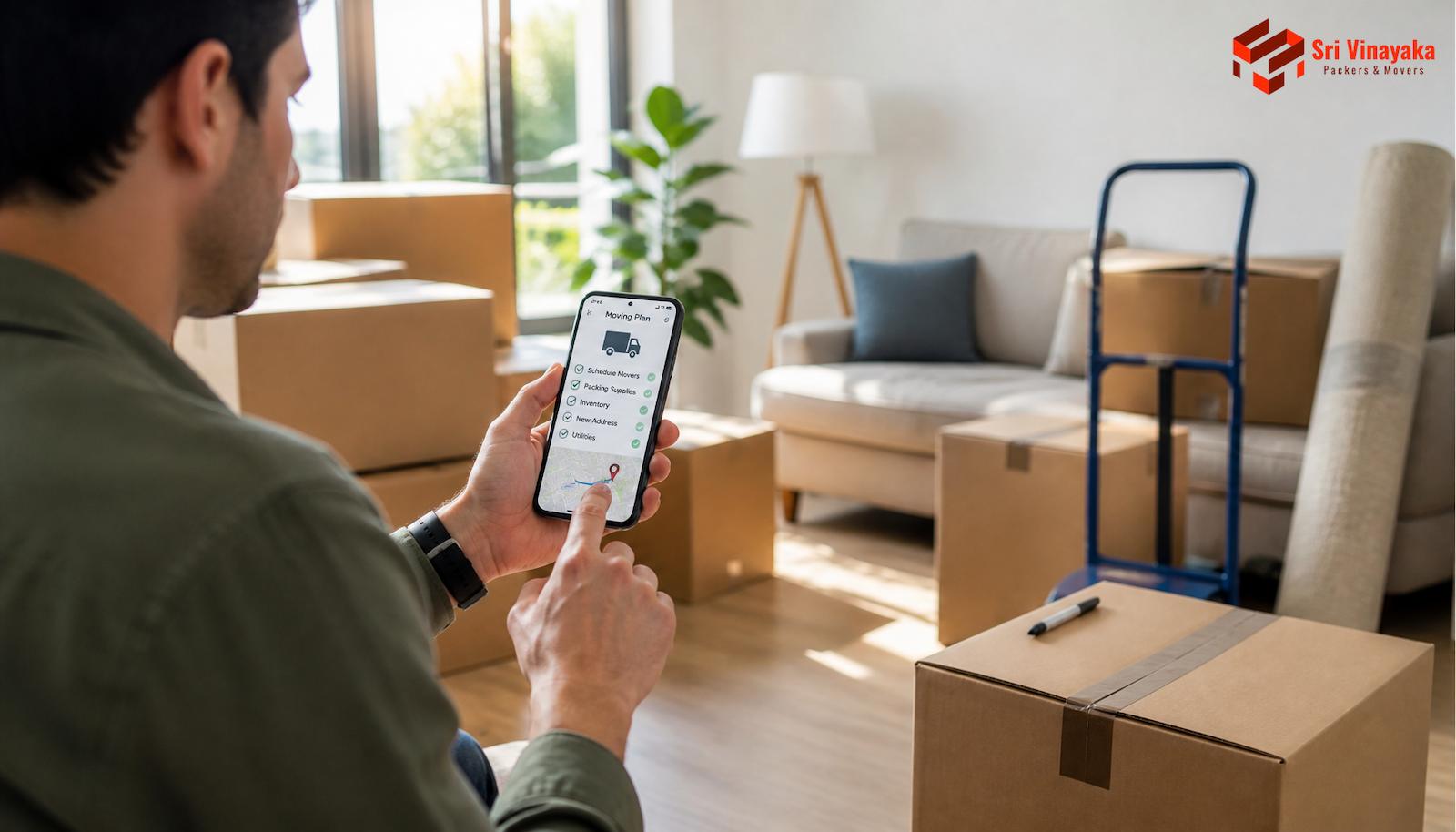
Technology in Shifting: How to Use Tech for a Better Moving Experience
Open Google and check out “how to make use of innovation for enhanced moving experiences” and the results page itself tells the story — a blend of moving-company guides, video programs, and AI Summary responses. That demand did not exist a decade ago.
Today, families relocating from Bengaluru to Mumbai or within the city expect real-time tracking, electronic quotes, and paperless documentation with just a few clicks, not as a special addition. Here is how technology in shifting works in practice and how you can benefit from it.
What Does Technology in Shifting Mean?
What is shifting technology? Moving with technology refers to the use of digital tools from the outset, during, and to the end of a move. It includes virtual surveys, app-facilitated bookings, barcode-enabled inventory management, GPS route tracking, and follow-up on completion. Rather than paper schedules and garbled phone conversations, the whole process passes along one shared digital track that you and your mover can follow together.
What are 5 technologies we use every day?
- Camera on your smartphone. Use it to take photos of each room and every almirah before packing; date/time stamped pictures work as on-site inventory for theft/damage claims and as evidence should a dispute arise.
- Maps and navigation apps. Route-planning applications enable movers to plan sequences of pickups and pre-empt bottlenecks in traffic on Indian highways. For you, a link to a shared route means you’re never left wondering where the truck is.
- Cloud storage. Before move week, scan lease agreements, copies of IDs, school records, and insurance papers to a cloud folder. Physical files are the single easiest thing to lose in transit.
- Messaging apps. A WhatsApp group with the crew leader substitutes phone-tag, with packing images, loading confirmations, and delivery ETAs in one place.
- Bluetooth smart tags. Tiny locators slipped into expensive cartons provide a quick location ping for that single box. For a full consignment, you need a commercial GPS tracker.
How do you utilize technology?
The practical answer is to attach one tool to one pain point rather than adopting everything at once. Most moving stress comes from a handful of predictable gaps — unclear pricing, unknown inventory, and silence during transit — and each of those has a straightforward digital fix.
A Step-by-Step Way to Use Shifting Technology for Your Move
- Define the riskiest task. For most households, it’s the inventory, because no one can recall what was packed in box 43. Defining that risk upfront prevents you from downloading five apps you’ll never open.
- Pick one tool per task. A phone camera for inventory, a cloud folder for documents, and the mover’s tracking link for transit. Three tools can pretty much cover all the moves.
- Deploy it before move week, not on move day. Test the app, create the WhatsApp group, and name rooms a week in advance while you are still calm enough to troubleshoot. Use a house shifting checklist to stay organized.
- Tell the crew and your family. Provide the crew leader with the group link, and assist your family in checking the tracking page. Most businesses in India like Sri Vinayaka Packers & Movers rely on a single coordinator, so having one point of contact keeps updates clear.
- Make the feedback loop. After delivery, compare the products to the images, settle the digital inventory, and provide feedback. That review is what helps improve the next move, and it aligns with best practices after relocation.
What If You Are Not Confident With Technology?
Digital anxiety, not digital access, is the stumbling block for many movers — especially if you’re arranging a move for elderly parents. Begin with a single simple app like WhatsApp and get the moving company’s coordinator to handle the app side of things, such as digital inventories and status links. This way, all you need to worry about is a single tracking link to learn before the truck arrives.
Where Shifting Technology Changes the Move Most
Three tools handle most of the heavy lifting throughout the industry, and all three are now standard rather than premium. If you only ask your mover about three things, ask about these.
Real-Time GPS Tracking and Delay Alerts
Live GPS tracking of the vehicle allows the mover to send you estimated arrival windows and even in-transit delay alerts so you are not calling to ask. For interstate moves, this visibility can distinguish between an on-schedule handoff or a day of waiting. Request the tracking link in writing before the truck is loaded.
Barcode, QR Code, and Digital Inventory
Box-level barcoding or QR-code packing means each carton is scanned when packed, loaded, unloaded, and delivered. A digital inventory list means you can find “kitchen glassware” without opening six boxes. This one simple thing will cut loss and misplaced-box claims more than any other.
Virtual Video Surveys and Remote Estimates
Instead of waiting days for an in-person visit, you can take a virtual walk through your house on a video call while a consultant measures volume, identifies delicate articles, and notes access challenges.
The quote that follows is more precise because it is based on firsthand observations, and it generally arrives the same day. For busy households, this is the most immediate time saver in contemporary moving technology.

Final Checklist: Technology in Shifting at a Glance
- Book a virtual survey instead of waiting for an in-person visit.
- Photograph every room and every high-value item before packing begins.
- Insist on barcode or QR-labelled cartons with a digital inventory list.
- Get the consignment tracked, with an ETA and delay alerts, in writing.
- Keep documents in cloud storage rather than a cardboard file.
- Save one coordinator’s contact for all updates instead of calling multiple numbers.
- Review the digital inventory against your photos on delivery day.
Technology in shifting does not replace good packing — it makes good packing verifiable, trackable, and far less stressful. Choose a mover who shares digital quotes, labelled inventory, and live tracking as standard, and you remove most of the uncertainty from moving day.
Sri Vinayaka Packers & Movers combines trained packing crews with digital checklists, WhatsApp status updates, and tracked consignments, so your household goods move with full visibility from doorstep to doorstep.
FAQs
No. Even a local move within Bengaluru benefits from a photo inventory and labelled cartons, because most damage and misplacement happens during loading and unloading rather than on the highway.
Usually not. Tracking links, digital quotes, and WhatsApp updates are typically bundled into the standard quotation, which is billed on volume and distance. Only optional add-ons such as storage or special packing material add to the rupee figure. If you want to control costs, learn how to save money while planning your next move.
Yes, if the mover offers GPS-tracked vehicles. Ask for a tracking link and a delivery window in writing before loading starts, and confirm whether delay alerts are sent automatically or on request.
Compare the delivery against your pre-move photographs and the digital inventory, then raise the claim with the mover along with the damaged photographs. A timestamped visual record is the strongest evidence you can hold. For added protection, review relocation insurance and this guide to packers and movers insurance.